
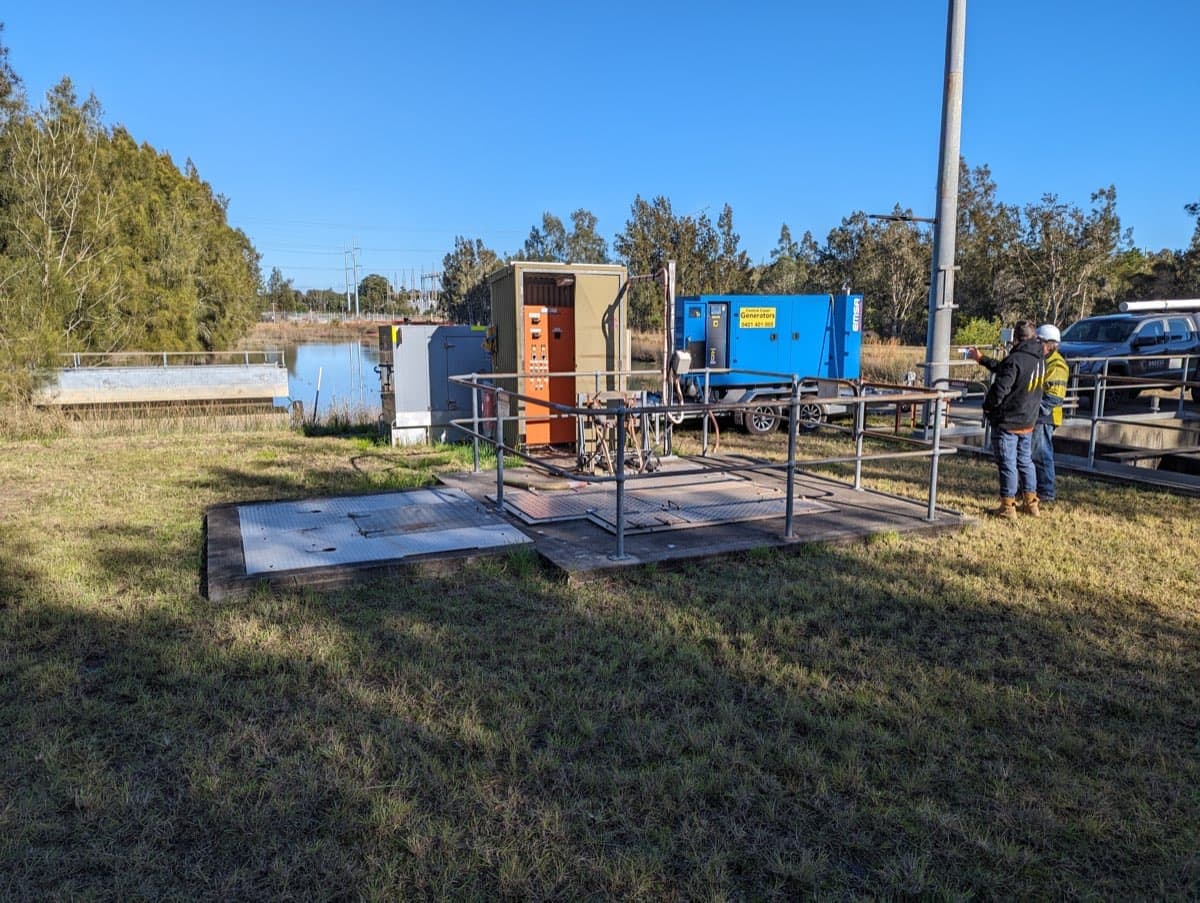
DWLS stormwater transfer pump station
At GPM
Generator Property Management (GPM) operates a dirty water catchment reservoir located in a remote location. The stormwater from around 40 acres is channelled into the Dirty Water Lift Station underground reservoir. Once the reservoir is full the pump station automatically transfers the collected water to an 8 ML dam with an oil separator. The pump station is equipped with an 80 kW submersible pump. Due to remote location the pump uses a diesel generator for its power supply. The original setup had a number of challenges. ControlX was engaged to address these challenges.
Challenges

Off-grid site
The pump station remote location lacks 415V power supply and requires a diesel generator.
Overloads on pump starts
The diesel generator and the alternator were experiencing overloads during the Direct-On-Line (DOL) starts.

Routine site visits
Lack of telemetry and the remote location require technicians to visit the site for constant manual checks and confirmation of pump operation.
Solution
Solar and generator
The control system runs on its own at a site with no mains power. The diesel generator starts automatically and powers the pump when the well reaches high level. While the generator is off, solar panels charge a 12V battery that keeps the controls and the health monitoring running through the night and on cloudy days.

Variable speed drive
A 90 kW variable speed drive (VSD) takes the load off the generator at pump start. It limits the starting current and ramps the pump up gradually. The VSD starts automatically on high level, or on a local or remote request from the controller, and adds motor protection for the pump.

Remote monitoring
A web page controls and monitors the station: pump state, active and past alarms, fuel level and battery level. To save power the site controller sleeps between checks, but a pump run can still be requested from the web page, and the system starts the pump at its next wake cycle.
Results

Lower running costs
By automating the system and enabling remote monitoring, manual site visits are minimised, cutting down on travel expenses and labour costs.
The integration of the solar system and sleep mode minimises diesel fuel usage, reducing fuel consumption and generator wear.
Smoother pump startups decrease the likelihood of equipment damage, lowering maintenance and replacement costs.

Monitoring on solar power
Real-time monitoring of pump status, fuel levels, and alarms allows for quicker response to issues, preventing potential system failures or overflows.
Solar power reduces the dependency on diesel fuel, making the system more environmentally friendly and cost-efficient over time.
This also provides a clean energy solution in an off-grid scenario, reducing the overall carbon footprint of the operation.

More uptime
The installation of the VSD reduces the startup current, minimising generator overloads and extending the generator’s lifespan.
The VSD’s ability to gradually accelerate the pump reduces mechanical stress, leading to longer equipment life and fewer breakdowns.
The solar-powered control system ensures that critical system monitoring is available even when the generator is off, improving overall reliability.